Category: Uncategorized

A Non-Starter (Alternator Problems in Cold Weather)

As the temperatures dip, we all know there could be problems starting our vehicles. After all, batteries can grow old and not hold a charge as well as when they were newer. Or starters can go bad.  But there’s one more component to keep an especially sharp eye on during winter: your alternator.

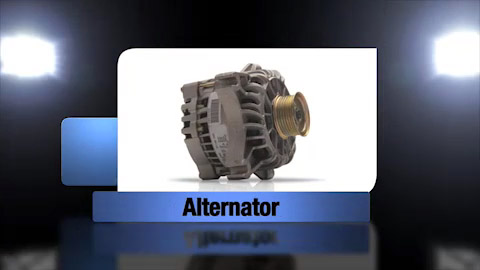
The alternator is sort of like a small generator. It sends power out to various parts in your vehicle that need electricity.  That includes the battery, which needs charging to keep its power topped off.  The alternator creates electricity by taking mechanical energy from the engine and turning it into electricity.  It is connected to the engine by belts and pulleys. 

In cold weather, the material the belt is made from is less flexible than it is in warm weather.  That means it may not be turning the pulleys as effectively since it doesn’t have the same grip. Also, when it’s colder, lubricants, including the engine oil, are a little stiffer and parts just don’t move like they do when the weather’s warmer.  With that extra strain, sometimes it takes the alternator longer to recharge the battery. That, in turn, may leave the battery a little less power to start the engine when it’s cold.

You may have a warning light on your instrument panel that looks like a battery.  If it lights up or if you notice your headlights flickering or not shining quite as brightly as they usually do, it could mean a weak alternator. But it also could be an aging battery, corroded battery terminals, a loose belt or another charging system part. Yes, it’s complicated. 

Pinpointing the cause involves testing the battery and charging system with diagnostic equipment.  If it does turn out to be an alternator, there are options besides replacing it with a brand new, original equipment part.  Ask your service advisor for recommendations. Obviously, you want your vehicle to start reliably, especially in cold weather.  Take care of your charging system and it will take care of you.

Autotronics of St. Peter
111 Jefferson Avenue
St. Peter, MN 56082
507.934.9290
http://autotronicsstpeter.com

Automotive Tips from Autotronics of St. Peter: Serpentine Belt System Wear

The primary job of the serpentine belt for St. Peter drivers is to provide important traction to spin the accessories. As the belt wears it loses some of its grip and the accessories may not spin at optimal speeds. For example, if your alternator doesn’t spin fast enough, the battery will not completely recharge while you’re driving and you could end up stranded around St. Peter with a dead battery.

In short, a worn serpentine belt will stress all of the accessories it powers leading to premature wear and possible early replacement. When as little as 5% of belt material is lost, the serpentine belt cannot provide the proper traction for the accessories. Your friendly and professional Autotronics of St. Peter service advisor can inspect your belt for excessive wear and replace your serpentine belt system if it’s excessively worn.

Give us a call.

Autotronics of St. Peter
111 Jefferson Avenue
St. Peter, MN 56082
507.934.9290
http://autotronicsstpeter.com

When Metal Meets Metal (Wheel Bearings)

What part of your vehicle has little metal balls inside that are lubricated and allow you to cruise on down the road?  They are wheel bearings, and automotive designers might argue they are human beings’ second greatest invention of all time (the first is, of course, the wheel!).

You have a wheel bearing at each wheel.  They allow your wheels to turn freely, minimizing friction that would ordinarily slow you down when metal meets metal.  When one of your wheel bearings starts to go bad, it lets you know. A wheel bearing does its work quietly when it’s in good health but starts getting noisy when it isn’t.  People describe the noise differently.  Sometimes it sounds like road noise, a pulsating, rhythmic, sound.  That pulse speeds up when your vehicle speeds up. 

Here’s what’s happening when you hear that sound.  As mentioned, the bearing has these little metal balls inside a ring.  They have a lubricant inside to reduce friction between the balls; modern wheel bearings are sealed and they’re intended to do their job without any maintenance. 

Wheel bearings take a beating; you hit some rough potholes or go over some uneven railroad tracks. Sometimes water can get into a bearing and reduce the ability of the lubricant to do its job.  Time starts to take its toll, too. When the lubricant isn’t reducing friction like it should, the bearing can heat up. One of those little balls can start shedding pieces of metal and soon those shards start grinding up the other balls.  Friction takes over and soon your wheel isn’t turning smoothly. That’s what’s causing the sound.  If a wheel bearing is not fixed, it could eventually seize up completely, and you can be stranded.

It’s a lot easier if you heed the early warning signals, that pulsating noise.  Now, sometimes a similar noise can be caused by a bad tire, but in either case, it’s important to have it checked out. Our Autotronics of St. Peter technicians will be able to tell you fairly quickly what the problem is and offer a solution.

Wheel bearings generally don’t fail often and usually last from 85,000-100,000 miles/140,000km to 160,000km. But consider them a long-term maintenance item that, once fixed, will keep you heading smoothly to the next destination.

Autotronics of St. Peter
111 Jefferson Avenue
St. Peter, MN 56082
507.934.9290
http://autotronicsstpeter.com